


1月27日上午,贵州省第十四届人民代表大会第四次会议隆重开幕。会上,政府工作报告指出,2025年和“十四五”以来,贵州启动建设1个国家实验室分支机构,获批建设5个全国重点实验室,布局建设5个省实验室。
其中,发生在中国-斯里兰卡茶叶绿色防控技术“一带一路”联合实验室的跨国故事,正在两国之间生根发芽。
从斯里兰卡起伏的茶山,到中国贵州云雾缭绕的高原茶园,一片茶叶,连接起两个国度的产业脉搏,也牵引着斯里兰卡青年胡安的科研梦想。
From the undulating tea hills of Sri Lanka to the mist-shrouded tea mountains of Guizhou, China, a single tea leaf connects the industries of two nations and guides the research dream of Sri Lankan youth Sajith.

贵州大学斯里兰卡留学生胡安
斯里兰卡,世界主要茶叶生产国之一,其出产的“锡兰红茶”被誉为“献给世界的礼物”。
Sri Lanka, one of the world’s major tea producers, is renowned for its Ceylon Tea, often called “a gift to the world.”
中国贵州,茶园面积稳定在700万亩,规模稳居中国前列。作为中国茶叶的重要产区,贵州不仅产量巨大,更以“干净茶”和绿色发展理念引领产业。2025年,贵州红茶产量与出口均价双双位居中国第一,抹茶远销全球。
Guizhou, China, maintains a stable tea plantation area of approximately 1.15 million acres, ranking among the country's largest. As a key tea-producing region, Guizhou not only boasts massive output but also leads the industry with its “clean tea” philosophy and green development ethos. In 2025, Guizhou’s black tea production and average export price both ranked first in China, while its matcha is sold globally.
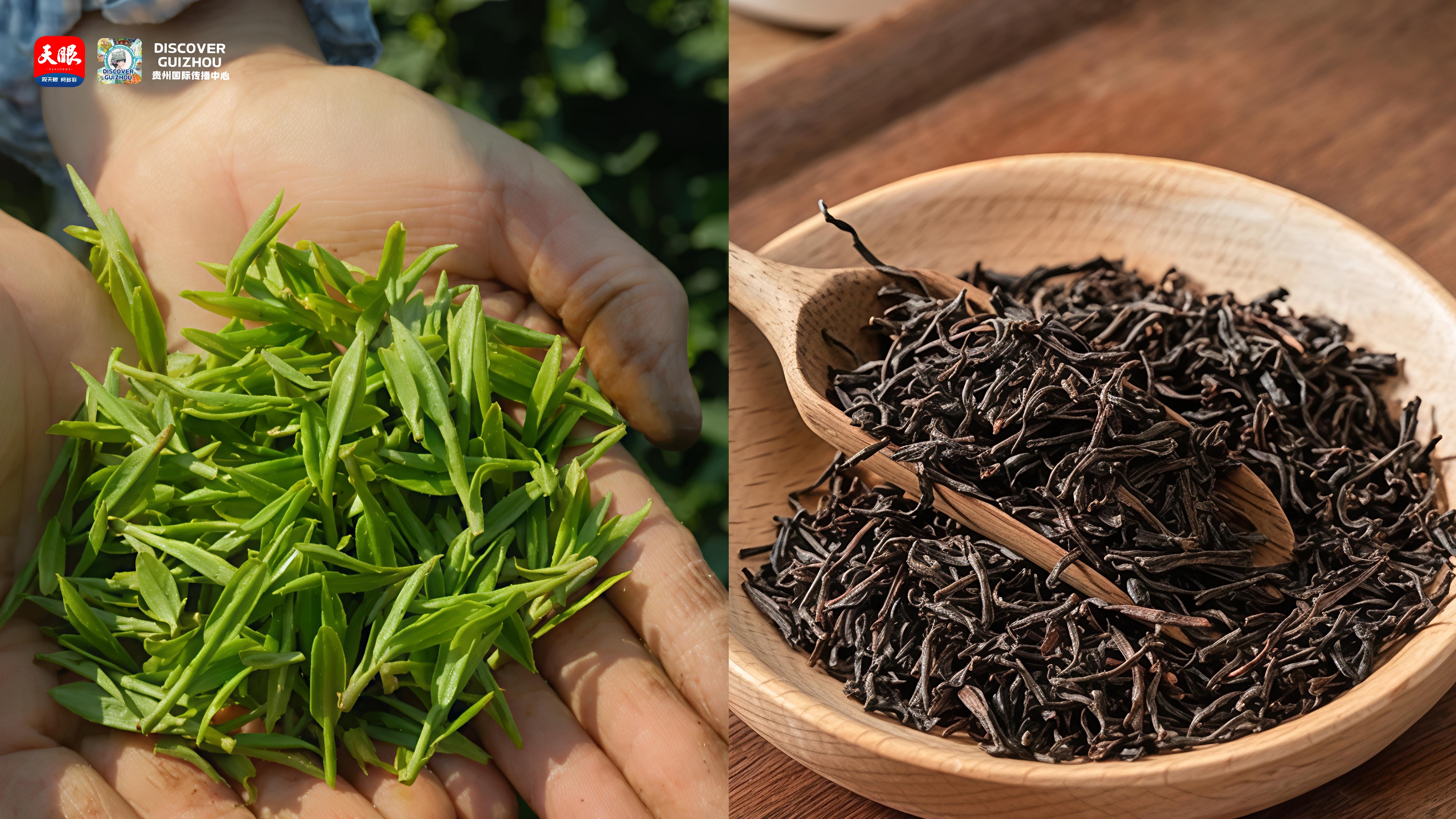
贵州绿茶与锡兰红茶
然而,光鲜的全球地位之下,是胡安故乡茶山的具体困境。童年时,他目睹许多茶园因虫害肆虐、茶农缺乏科学管护知识而被废弃。老化茶丛超过80—100年、土壤退化、施肥不规则等长期问题,严重制约了产业的根基。这在他心中埋下了一颗种子:“我想为家乡的茶园做点什么。”
Yet beneath this impressive global standing lie the concrete challenges facing Sajith’s hometown tea fields. As a child, he witnessed many plantations abandoned due to severe pest infestations and a lack of scientific management knowledge among farmers. Long-term issues such as over 80-100-year-old tea bushes, soil degradation, and irregular fertilization practices, severely constrain the industry's foundation, planting a seed in his mind: “I want to do something for my hometown's tea gardens.”
怀着这份初心,胡安跨越5000多公里,选择来贵州留学——这里能提供最真实的田间研究场景,直面茶产业的实际挑战。
Guided by this aspiration, Sajith journeyed more than 5,000 kilometers to pursue his studies in Guizhou , a place where real-world fieldwork addresses the practical challenges of the tea industry.
在贵州大学,他专注于茶树病虫害绿色防控研究,致力于用生物农药等环保手段替代化学农药,守护茶园生态。他所依托的,正是贵州大学绿色农药全国重点实验室。2024年,中国-斯里兰卡茶叶绿色防控技术“一带一路”联合实验室获批立项,为他的研究注入了更强大的国际合作动能。
At Guizhou University, Sajith focuses on green pest and disease control in tea plants, working to replace chemical pesticides with eco-friendly methods like biopesticides to protect plantation ecosystems. His research is anchored in the State Key Laboratory of Green Pesticides of Guizhou University. In 2024, the China-Sri Lanka Joint Laboratory for Green Tea Pest Control Technology under the Belt and Road Initiative was approved, injecting stronger momentum for international collaboration into his work.

胡安在实验室里做实验
在导师金林红教授的带领下,胡安坚持“从田间来,到田间去”。他将实验室分析与田间实践紧密结合,尤其在茶枝小蠹虫等关键虫害防控上,不断探寻更绿色的解决方案。
Under the guidance of his mentor, Professor Jin Linhong, Sajith adheres to the principle of “from the fields, to the fields.” He tightly integrates lab analysis with on-the-ground practice, continually exploring greener solutions, especially for key pests like the tea shot-hole borer.
科研的土壤在贵州,而技术的果实,他带回了斯里兰卡。多次随导师返回故乡进行技术示范的经历,让他真切感受到了科学的力量。
While his research is rooted in Guizhou, its technological fruits are brought back to Sri Lanka. Multiple trips home with his professor for technical demonstrations have shown him the tangible power of science firsthand.
在康提的茶田,变化令人振奋:采用绿色防控的茶树,两个月生长速度就追上了以往半年的水平,长势明显优于对照田。当地茶农从观望变为积极求教,甚至自愿提供土地作为示范田。
In Kandy’s tea fields, the changes are inspiring: tea plants managed with green control methods grew in two months what previously took half a year, visibly outperforming control plots. Local farmers shifted from skepticism to actively seeking guidance, even volunteering their land for demonstration plots.
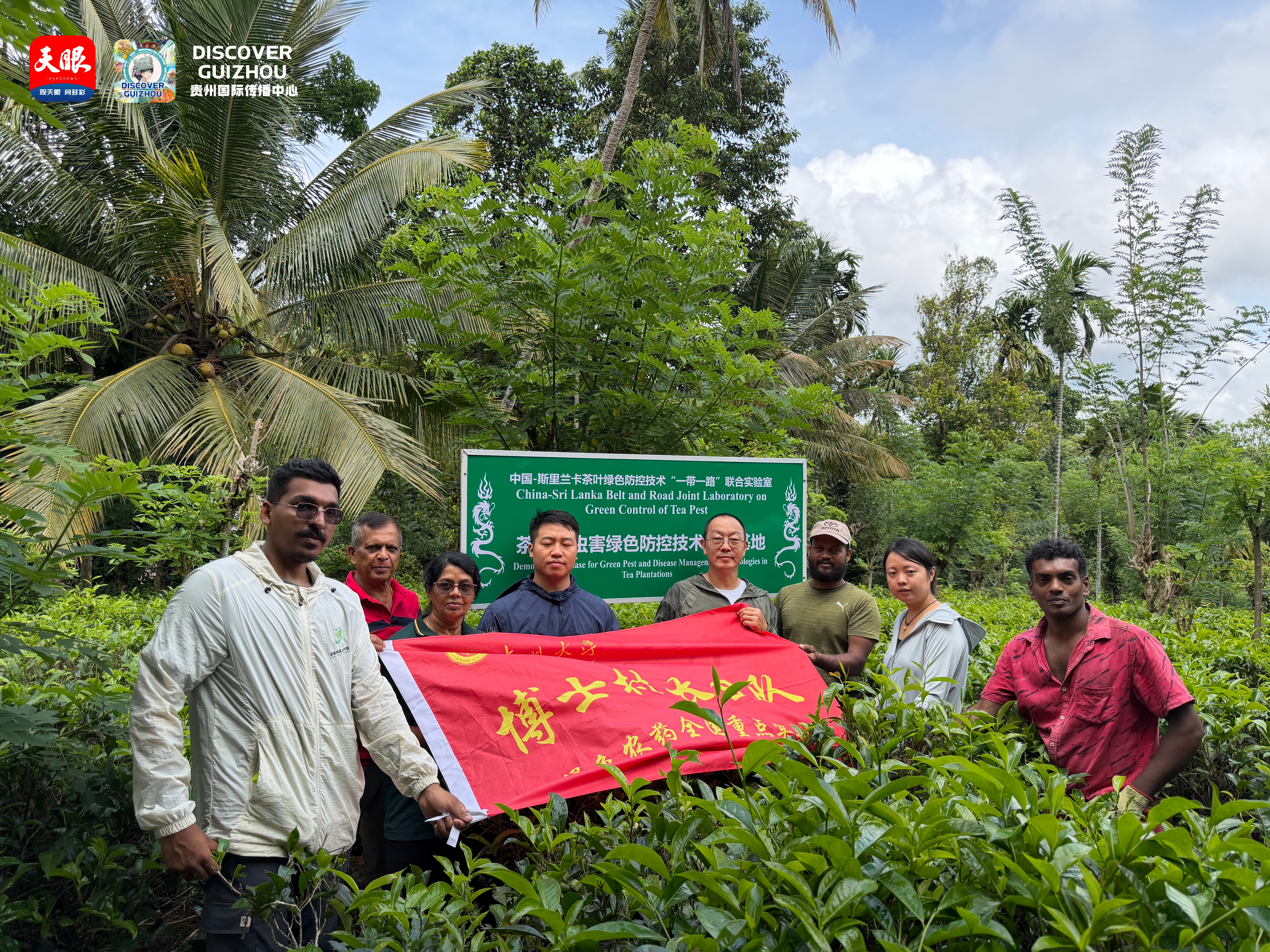
胡安同导师在斯里兰卡进行技术示范
推广之路并非坦途。语言障碍、技术本土化都是难题。胡安摸索出一套“三步法”:先将中文文献译成英文,再用僧伽罗语进行本土化解读,最后通过田间实操,把复杂原理变成茶农听得懂的“田间语言”。
Yet scaling up the technology was far from smooth.Language barriers and the need to localize technology posed significant challenges. Sajith developed a “three-step method” to bridge the gaps: first, translating Chinese research into English; then, adapting it into culturally accessible Sinhala; and finally, translating complex principles into practical “field language” through hands-on demonstration.
源自贵州的绿色技术,在斯里兰卡的土地上生根发芽。
In this way, green technology from Guizhou took root and began to grow in Sri Lanka.
回顾当初的选择,胡安说:“贵州大学拥有应用型的专业设置、先进的平台,更能让成果快速从实验室走向田间——这是最吸引我的地方。”
Looking back on his initial choice, Sajith says, “Guizhou University offers applied-oriented academic programs and cutting-edge platforms that enable faster translation of research outcomes from labs to farmlands—that's what appealed to me the most.”
展望未来,他的目光清晰而坚定:继续深耕绿色防控领域,攻读博士学位,让这条以茶为媒的跨国纽带越系越牢,为家乡茶业注入持久活力,也让这段跨越山海的茶缘,续写温暖有力的篇章。
Looking ahead, his vision is clear and firm: to continue deepening his work in green pest control, pursue a doctoral degree, and strengthen this tea-mediated transnational bond. He aims to infuse lasting vitality into his hometown’s tea industry and ensure that this tea connection across mountains and seas continues to write a warm and meaningful story.
 上一篇:
回望2025 展望2026
2026-01-27
上一篇:
回望2025 展望2026
2026-01-27
 下一篇:
冰雪春天 | 无须北国,黔境山水正上演“冰雪奇缘”
2026-01-27
下一篇:
冰雪春天 | 无须北国,黔境山水正上演“冰雪奇缘”
2026-01-27
