

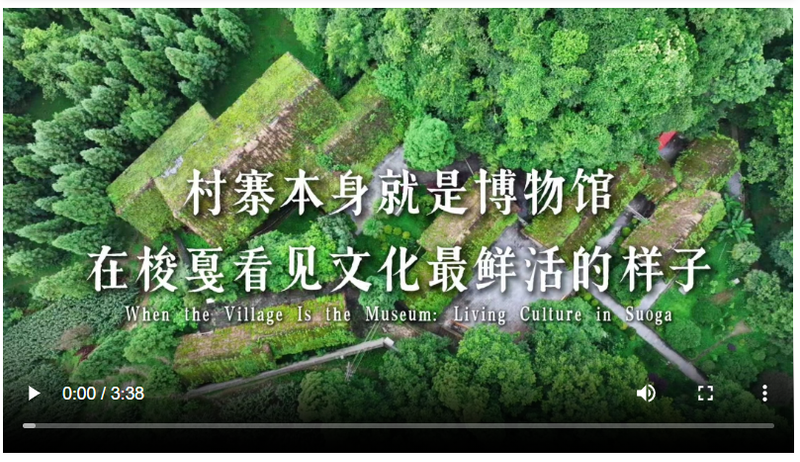
在贵州省六盘水市六枝特区与织金县交界处,海拔1400米至2200米的高山箐林间,散落着一支不足5000人的苗族支系——箐苗。因族人头顶佩戴形似牛角的巨大头饰,这一支系又被称为“长角苗”。在苗族的多次迁徙中,这片山地成为他们最终的安身之所,也沉淀出一套独特而完整的文化体系。
At the border between Liuzhi Special District of Liupanshui City and Zhijin County in Guizhou Province, amid mountain forests at elevations ranging from 1,400 to 2,200 meters, lives a Miao sub-group of fewer than 5,000 people known as the Jing Miao. Because community members wear massive horn-shaped headdresses on their heads, they are also known as the Long-Horn Miao. Through multiple waves of migration in Miao history, this mountainous region became their final place of settlement, giving rise to a distinctive and complete cultural system.
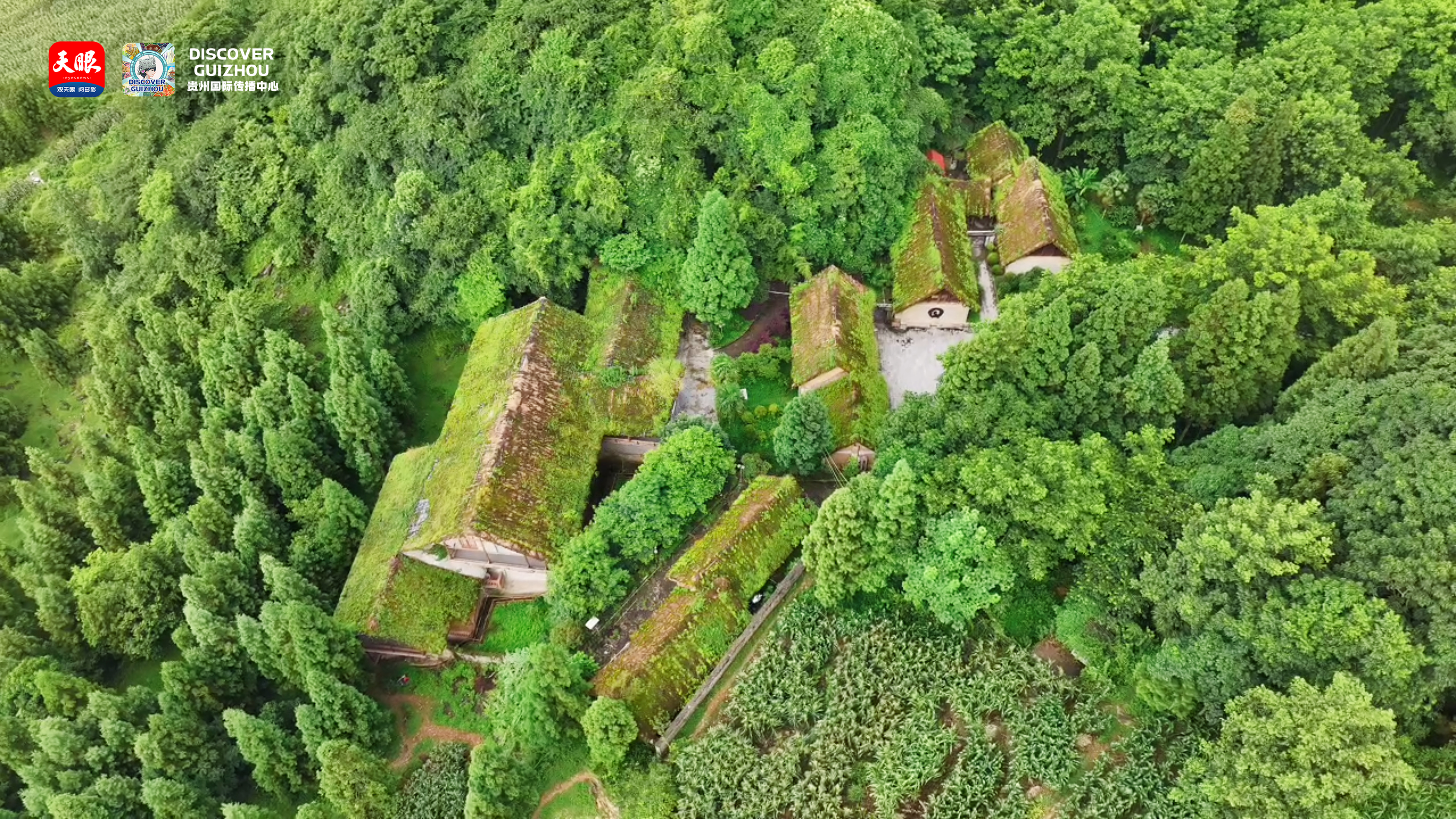

“梭戛生态博物馆,区别于大家印象中的传统博物馆。”六枝梭戛生态博物馆馆长余瑜说,“这是一座没有围墙的博物馆”。1998年,在中挪合作框架下,中国第一座生态博物馆在梭戛建成。它并不把文化从村寨中“取走”,而是让这里的12个自然村落本身成为展陈空间,资料信息中心则负责记录和存储社区的文化信息。
“The Suoga Eco-Museum is different from what people usually imagine a museum to be,” said Yu Yu, Director of the Suoga Eco-Museum. “It is a museum without walls.” Built in 1998 under a framework of cooperation between China and Norway, it was China's first eco-museum. Rather than removing culture from the village, the museum treats its 12 natural villages themselves as exhibition spaces, while a documentation and information center is responsible for recording and preserving the community's cultural heritage.
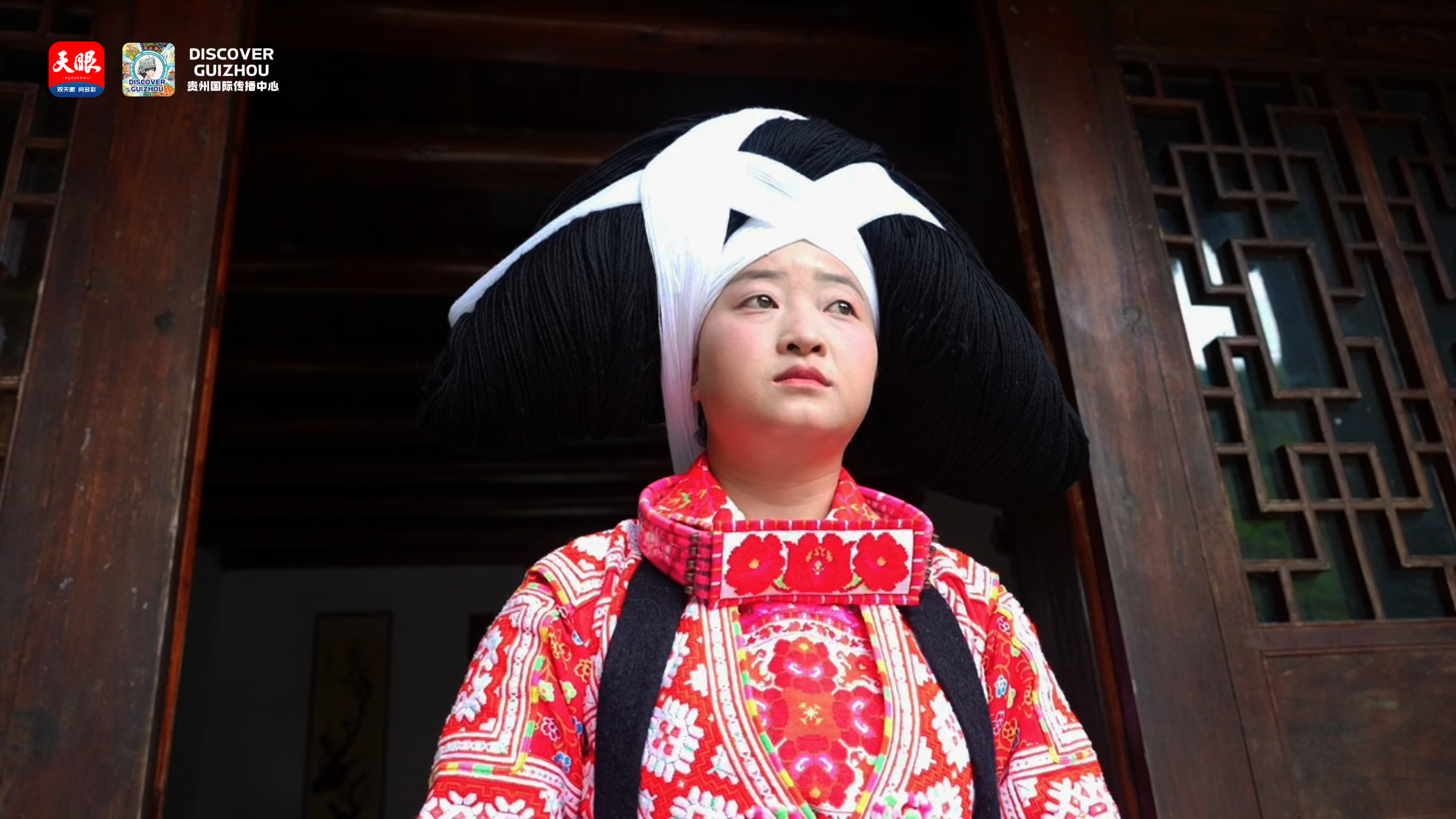
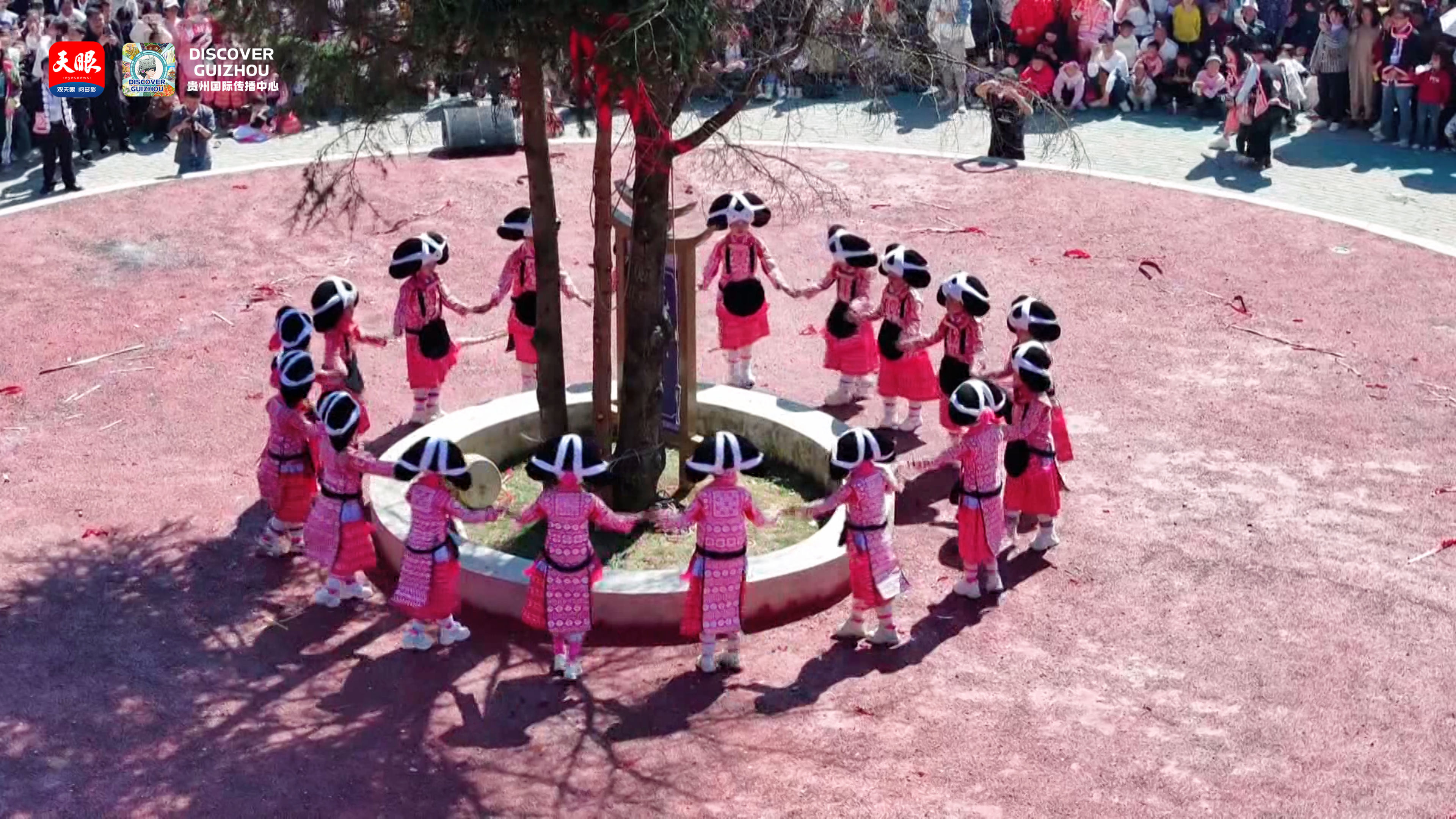
在箐苗文化中,最醒目的符号,来自女性头顶的长角头饰。头饰制作时,先在发中固定牛角形木板,再以麻线、毛线与头发反复盘绕而成,重量可达两公斤以上,披散的长发最长超过三米。关于这种装束的起源,当地流传着清初苗民为避战乱、震慑野兽而佩戴夸张头饰的说法。久而久之,防御之物演变为身份标识,成为族群记忆的一部分。
Within Jing Miao culture, the most striking symbol is the long-horn headdress worn by women. To make it, a horn-shaped wooden base is first fixed into the hair, which is then wrapped repeatedly with hemp thread, wool, and human hair. Some headdresses weigh more than two kilograms, and the loose hair can reach lengths of over three meters. Local accounts trace the origin of this attire to the early Qing Dynasty, when some Miao people, fleeing warfare and seeking to frighten off wild animals, adopted exaggerated headgear. Over time, what began as a form of protection evolved into a marker of identity and a vessel of collective memory.
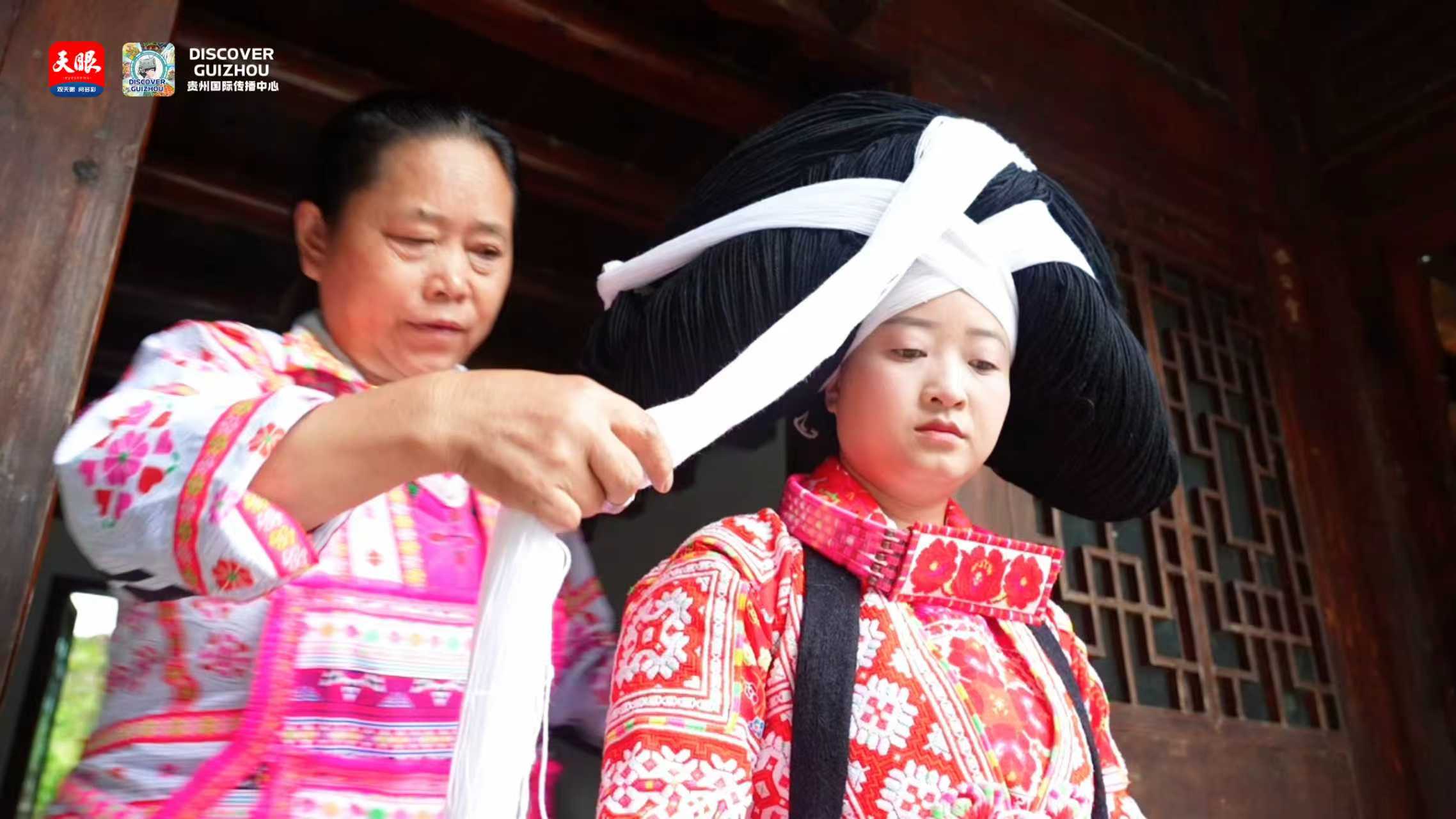
而在国家级非遗项目“梭戛箐苗彩色服饰艺术”省级代表性传承人杨二妹看来,头饰真正的重量,并不在“形”,而在“情”。她说,箐苗女性会将母亲、外婆梳落的头发一点点保存,纺成线,盘成发,代代相传。“每次戴上头饰,我就会想起她们。”在她看来,头饰中盘绕的不只是头发,也是家族与母系血脉的延续,因此箐苗常被称为“把母爱戴在头上的民族”。
For Yang Ermei, a provincial representative inheritor of the national intangible cultural heritage project Suoga Jing Miao Colored Costume Art, the true weight of the headdress lies not in its form, but in its emotional meaning. She explained that Jing Miao women carefully save the hair shed by their mothers and grandmothers, spin it into thread, and pass it down through generations. “Every time I put on the headdress, I think of them,” she said. What is wrapped into the headdress is not only hair, but the continuation of family bonds and the maternal lineage. For this reason, the Jing Miao are often described as “a people who wear maternal love upon their heads.”
沿着石块铺就的小路走进陇戛寨,屋檐下晾晒着剥好的麻秆。麻丝经古老纺车织成麻布,再配以彩色蜡染与挑花刺绣,最终缝制成服饰。2008年,箐苗服饰艺术被列入国家级非物质文化遗产代表性项目名录。当地女孩五六岁学刺绣,八九岁接触蜡染,纺纱、织布、染色、挑花,成为日常生活的一部分。服饰上的纹样与线条,记录着迁徙路径、重大事件与神话记忆,构成一部“穿在身上的历史”。
Walking along stone-paved paths into Longga Village, one can see stripped hemp stalks drying under the eaves. The fibers are woven into cloth on traditional spinning wheels, then combined with colorful batik and intricate embroidery to create garments. In 2008, Jing Miao costume art was listed as a national-level intangible cultural heritage project. Local girls begin learning embroidery at the age of five or six and take up batik by eight or nine. Spinning, weaving, dyeing, and embroidery are woven into daily life. The patterns, lines, and symbols on the clothing record migration routes, major events, and mythological memories, forming what is often described as "history worn on the body."
文化并不只在服饰之上。竹林深处,三眼箫的声音在山谷间回荡。省级非遗项目“苗族三眼箫音乐艺术”省级代表性传承人熊天琨长期研究这一传统乐器,使其音阶从五声音阶拓展至七声音阶。“这样,它的表现力更加丰富,也有与世界音乐接轨的潜力。”箫声清润,如水流淌。在跳花坡节等重要时刻,青年携箫走寨串乡,山歌沿坡而上,把春天唱进整片箐林。
Culture here extends beyond clothing. Deep in the bamboo groves, the sound of the three-hole xiao echoes through the valleys. Xiong Tiankun, a provincial representative inheritor of the provincial intangible cultural heritage project Miao Three-Hole Xiao Music Art, has devoted years to studying the instrument, expanding its scale from five notes to seven. “This makes its expressive range richer and gives it the potential to connect with world music,” he said. The sound of the xiao is clear and flowing, like water. During important occasions such as the Tiaohuapo Festival, young people carry their flutes from village to village, mountain songs rising along the slopes as spring is sung into the forest.
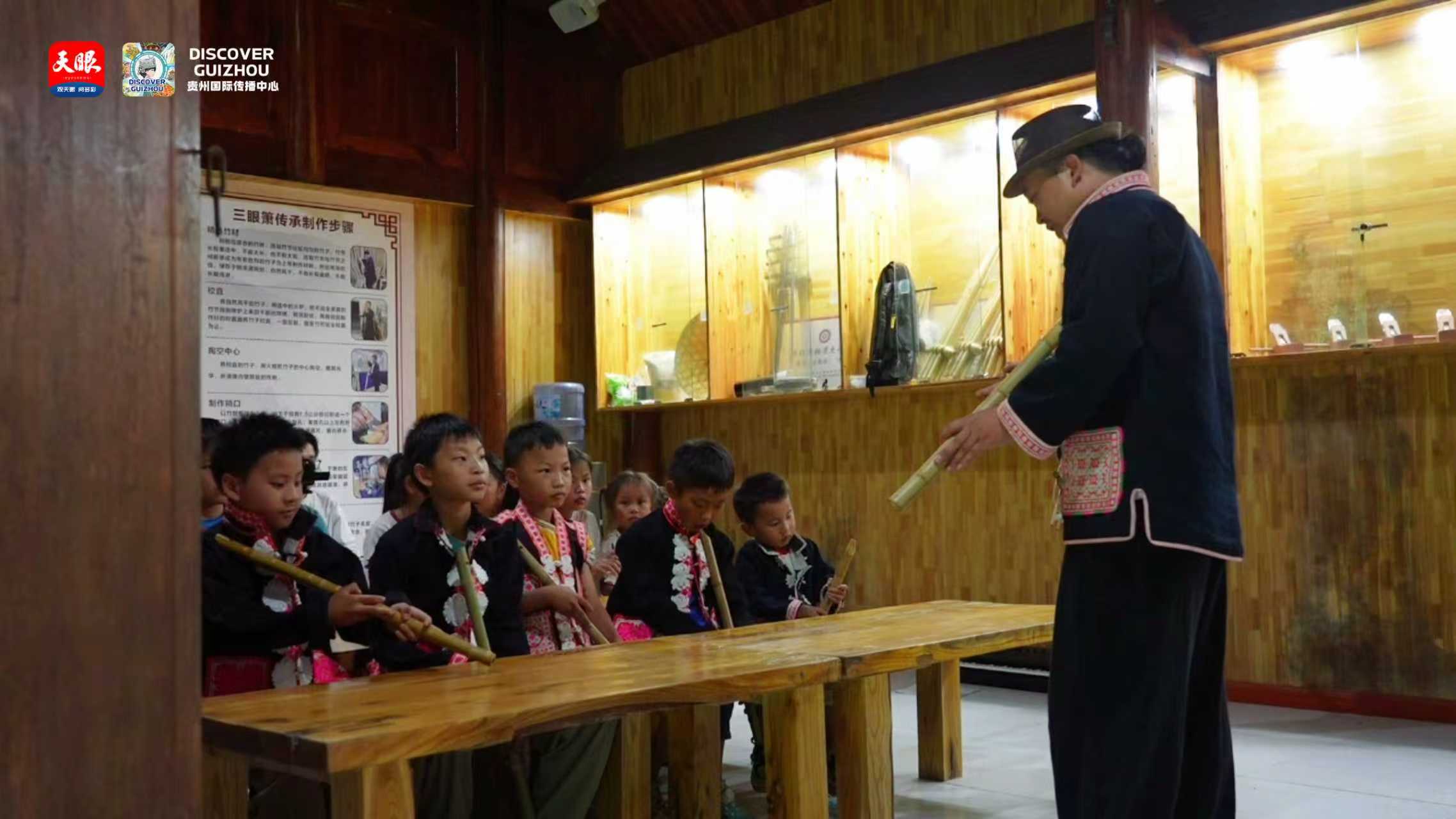
如今,这座“没有围墙的博物馆”仍在运转。陇戛逸夫小学开设刺绣、三眼箫、芦笙舞等社团,非遗代表性传承人走进课堂;村寨与生态博物馆协作,培养了服饰制作、乐器演奏和民族歌舞人才。
Today, this “museum without walls” remains in operation. Longga Yifu Primary School has established clubs for embroidery, the three-hole xiao, and lusheng dance, while inheritors of intangible cultural heritage are invited into classrooms. Villages work together with the eco-museum to cultivate talent in costume making, musical performance, and ethnic song and dance.
在城市中,博物馆往往承载精英叙事;而在梭戛,文化被留在原地,由普通人的日常生活持续书写。慢下来的一针一线、一箫一曲,仍在这片山地之中,继续生长。
In cities, museums often convey elite narratives. In Suoga, however, culture is kept in its place of origin and continuously written through the everyday lives of ordinary people. In the unhurried rhythm of needle and thread, flute and melody, culture continues to grow in these mountains.
来源:天眼新闻
 上一篇:
逃离城市内卷 去贵州三都找回生活的原生状态
2026-01-21
上一篇:
逃离城市内卷 去贵州三都找回生活的原生状态
2026-01-21
 下一篇:
高铁冬游记|万峰成林,油菜花开!外国朋友约你来黔西南过一个“宝藏冬天”...
2026-01-21
下一篇:
高铁冬游记|万峰成林,油菜花开!外国朋友约你来黔西南过一个“宝藏冬天”...
2026-01-21
